Overview
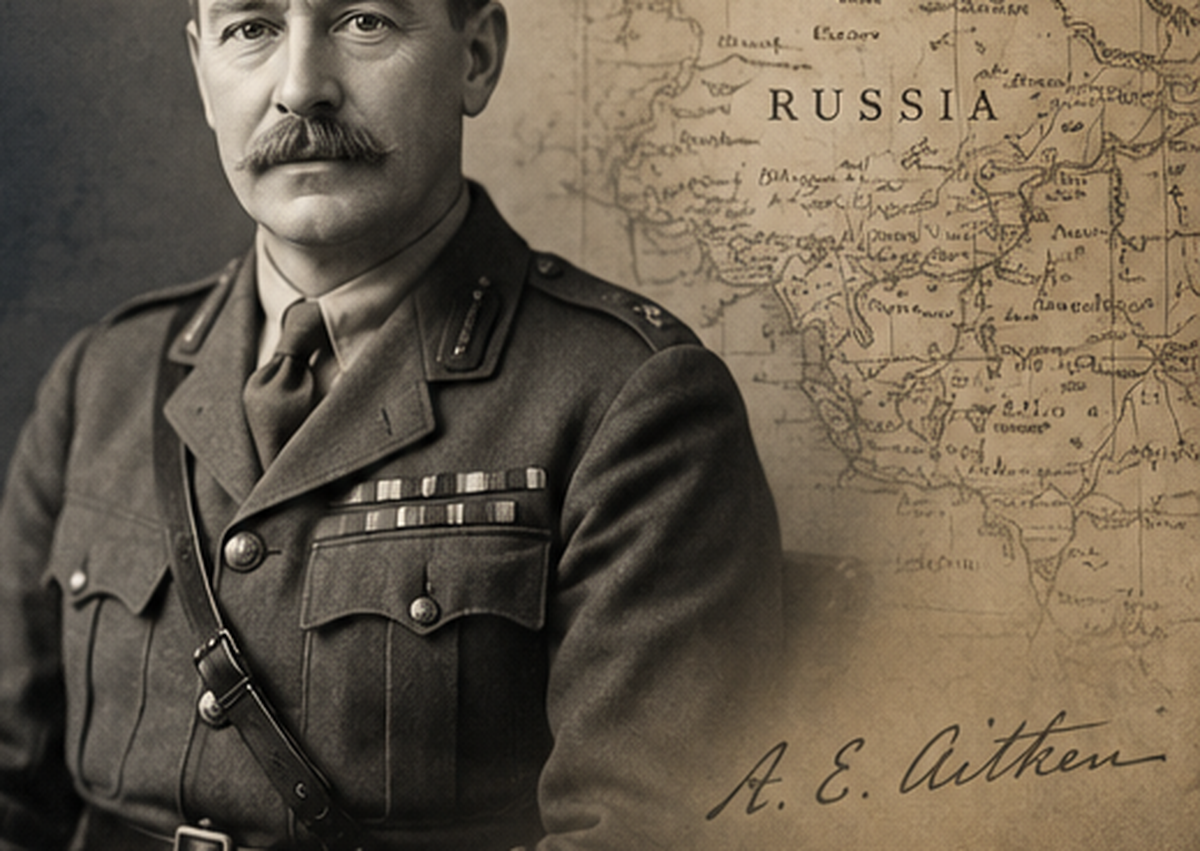
Brigadier-General Arthur Edward Aitken was a British officer of the British Army and later the British Indian Army. Commissioned in 1880, he served in several regiments and theatres of war, eventually commanding Indian Expeditionary Force B during the First World War. His name is closely associated with the ill‑fated Battle of Tanga in German East Africa in 1914, a campaign that shaped how his career was remembered.
Early life and education
Arthur Edward Aitken was born in Rochford, Essex, on 25 May 1861. By the time of the 1871 census he was recorded as a nine‑year‑old pupil at a school in Brighton, Sussex, reflecting a typical middle‑class upbringing that prepared him for a professional career in the armed forces.
He went on to attend the Royal Military College, Sandhurst, the main commissioning route for British Army officers. Sandhurst training emphasised discipline, leadership, and imperial service—values that would frame Aitken’s subsequent postings across the British Empire.
Military career before the First World War
Aitken was commissioned from Sandhurst in January 1880 into the 97th (The Earl of Ulster’s) Regiment of Foot, which later became part of the Queen’s Own Royal West Kent Regiment. Shortly afterwards, in February 1880, he transferred to the 29th (Worcestershire) Regiment of Foot. Early in his career he saw active service in the Sudan in 1885, part of Britain’s wider imperial campaigns in North‑East Africa.
He later transferred to the Indian Staff Corps, reflecting the growing importance of India within British imperial defence. Over the following decades he rose steadily through the ranks, being promoted major in 1900 and full colonel in 1911. Shortly before the First World War he held the temporary rank of brigadier‑general, a sign of senior responsibility within the Indian Army establishment.
The Battle of Tanga and Indian Expeditionary Force B
With the outbreak of the First World War in 1914, Aitken was given command of Indian Expeditionary Force B, a formation assembled in India for operations against German East Africa. Sailing from Bombay, his force numbered around 8,000 troops, including an infantry brigade, artillery batteries, and a machine‑gun company drawn largely from the Indian Army.
In November 1914 Aitken’s force attempted to seize the port of Tanga on the coast of German East Africa. The operation went badly: intelligence on German strength and defences was limited, coordination was poor, and many of the troops were relatively inexperienced. The battle became notorious as the “Battle of the Bees” because swarms of disturbed bees repeatedly attacked soldiers on both sides, adding chaos to an already confused engagement.
The British‑Indian assault was repulsed with significant casualties and loss of equipment. The defeat at Tanga damaged Aitken’s reputation and is often cited as one of the early Allied setbacks in the East African campaign. In the aftermath, he was relieved of his command, and the battle overshadowed much of his earlier service.
Later life and legacy
After Tanga, Aitken’s active wartime role diminished. Although he had enjoyed a long and varied imperial career, the failed operation in German East Africa became the defining episode in how he was remembered. He died in Rome, Italy, on 29 March 1924.
Modern assessments of Aitken tend to place his career within the broader context of early First World War expeditionary planning and the challenges of coordinating imperial forces in unfamiliar environments. The Battle of Tanga is now studied as an example of inadequate preparation, intelligence, and logistics—issues that went beyond any single commander, but which nonetheless shaped Aitken’s historical reputation.